
While some changemakers build solutions, others build hope.
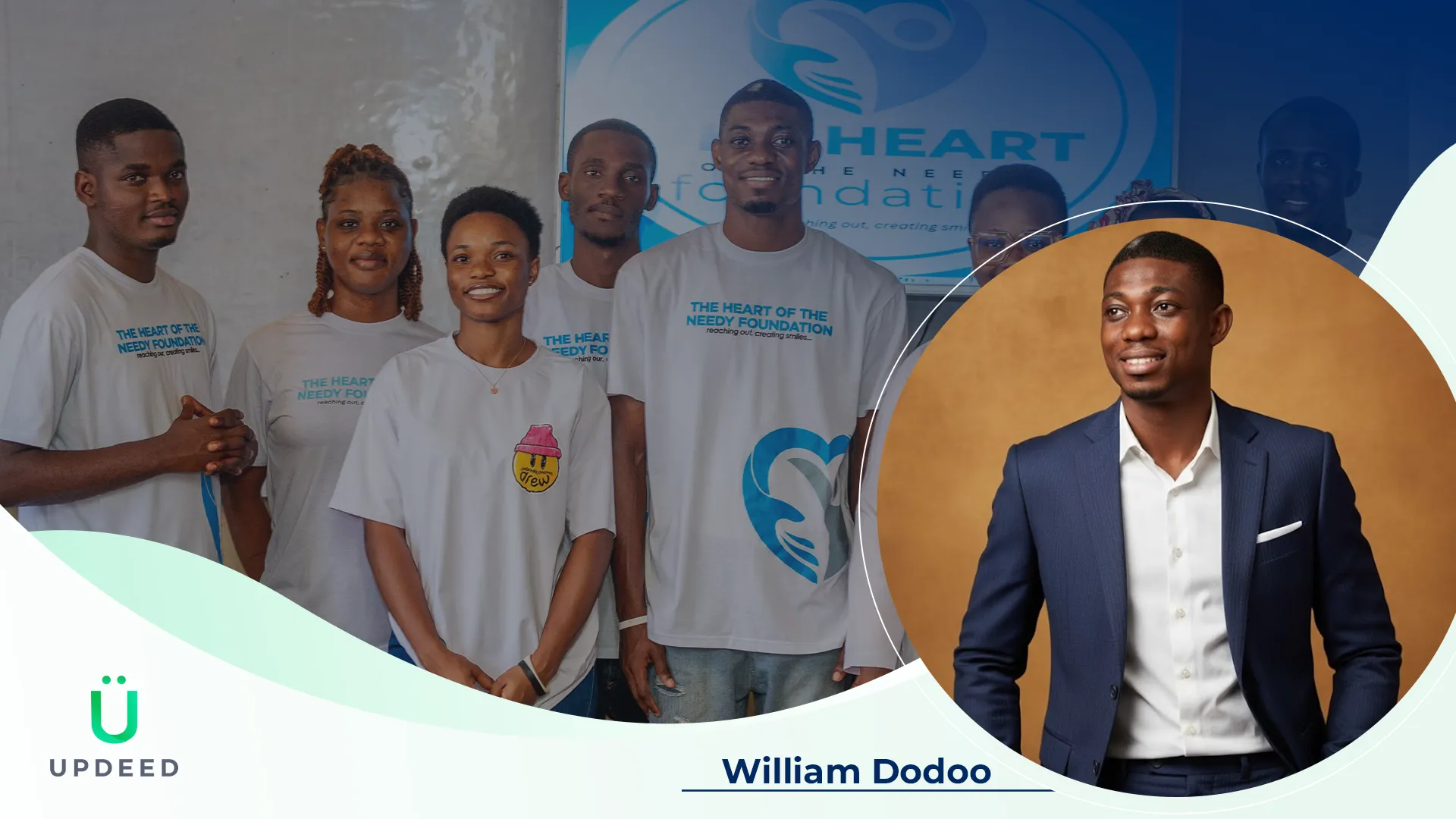
William Dodoo does both with compassion, consistency, and a deep belief in the potential of underserved communities across Ghana.
As the Founder & President of The Heart of the Needy Foundation, William leads impactful programs in education, menstrual health support, gender equality, and community relief work. His story is rooted in empathy shaped by personal struggle, strengthened through resilience, and carried forward by a commitment to serve those who feel unseen.
Today, William stands as one of the young leaders redefining grassroots impact in Ghana, proving that meaningful change begins with the courage to act.
1. Tell us a bit about your background
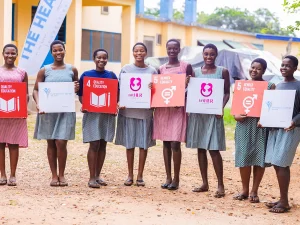
I come from a community driven background where service and empathy have guided much of my work. Today, I lead The Heart of the Needy Foundation, an organisation focused on advancing quality education and promoting gender equality through impactful community projects. Our initiatives range from providing learning materials to schools, offering menstrual health support to girls, and delivering relief assistance to vulnerable families. I am also pursuing a Bachelor of Technology in Computer Science at Accra Technical University, which is strengthening my capacity to design digital solutions that support social impact. My work is centered on empowering young people, lifting underserved communities, and building sustainable systems of support across Ghana.
2. What first inspired you to begin this journey or take on the role you are in today?
My journey began with a deep desire to make life a little easier for people who often feel unseen. Growing up, I went through difficult moments that shaped how I understood struggle and resilience. I saw how easily a person’s potential could be limited by circumstances beyond their control, and I also felt those limitations myself as a child. These experiences taught me empathy very early and pushed me to pay attention to the needs of others. Over time, I realised I could not wait for someone else to create the change I hoped to see. That sense of responsibility, together with the challenges that shaped my childhood, inspired me to start The Heart of the Needy Foundation and dedicate myself to meaningful service.
3. Along the way, what has been one of the most defining challenges you faced, and how did you navigate it?
One of the most defining challenges on my journey has been sustaining community projects with very limited resources. There were moments when the needs of schools and underserved communities were far greater than what we could provide. At times, we even had to go in for loans before we were able to complete certain projects, and this placed a heavy burden on us. Balancing personal responsibilities with the demands of the foundation was not easy, but it pushed me to grow. I learned to be more resourceful, to build partnerships, and to mobilise support from people who believed in our mission. This period shaped my resilience and taught me that real impact requires consistency, sacrifice, and a willingness to keep moving forward even when the process is difficult.
4. What impact do you feel your work has created so far?
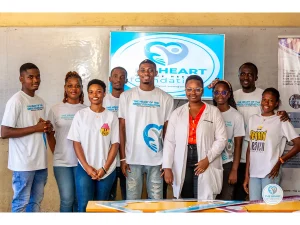
My work has created a growing impact across the communities we serve and within the spaces of education and empowerment. Through The Heart of the Needy Foundation, many students have received learning materials that support their academic journey. Young girls have gained knowledge on menstrual health along with the supplies they need to stay confident in school. Families in vulnerable situations have also benefited from relief support and outreach programs that restore hope. Beyond the direct support, I have seen a shift in awareness, where more young people and community members are becoming involved in service and social responsibility. These changes, whether large or small, show that consistent effort can spark meaningful transformation.
5. Looking ahead, what is your vision or goal for the future?
My vision for the future is to build a stronger and more sustainable support system for underserved communities, especially children and young women. I want to expand our educational programs, strengthen our empowerment initiatives, and create long term solutions that help people rise above their challenges. I am also working toward integrating more digital tools and skills training so young people can access opportunities beyond their immediate environment. This matters to me because I have seen how a single act of support can change a person’s direction. I want to help shape a future where hope is accessible, opportunities are within reach, and communities are empowered to grow with dignity.
6. Finally, what message would you share with others who want to create positive change but are unsure where to start?
You do not need to have everything figured out before you begin. Start with what you have, start where you are, and start with the people around you. Positive change often begins with small steps that come from a place of compassion. Focus on one need you can meet and take one action you can sustain. Along the way, you will learn, grow, and find others who believe in what you are doing. The most important thing is to begin, because every movement that transforms a community starts with someone who decides to act.
UPDEED’s Reflections
William Dodoo’s story is not one of convenience or comfort, it is a story of choosing responsibility in the absence of certainty.
His journey reflects a reality shared by many grassroots changemakers across the Global South: impact is often built under financial strain, emotional weight, and constant trade-offs. There are no guarantees. Resources are scarce. Progress is uneven. And yet, the work continues, sustained by empathy, community trust, and a belief that consistency matters more than scale.
At UPDEED, we believe stories like William’s deserve visibility precisely because they challenge dominant narratives about impact. They remind us that change is not always driven by large institutions or polished strategies. More often, it is carried forward by individuals who are willing to take on personal risk, navigate uncertainty, and keep showing up for their communities even when recognition is absent.
William’s leadership also highlights something essential: impact is relational. It grows when young people see themselves supported, when girls are able to stay in school with confidence, when families feel seen rather than forgotten. These outcomes may not always translate immediately into metrics, but they shape futures in lasting ways.
UPDEED exists to make this kind of work visible not to romanticize struggle, but to honor commitment. By spotlighting changemakers like William Dodoo, we aim to create a global archive of lived impact: stories that help others believe that change is possible where they are, with what they have.