

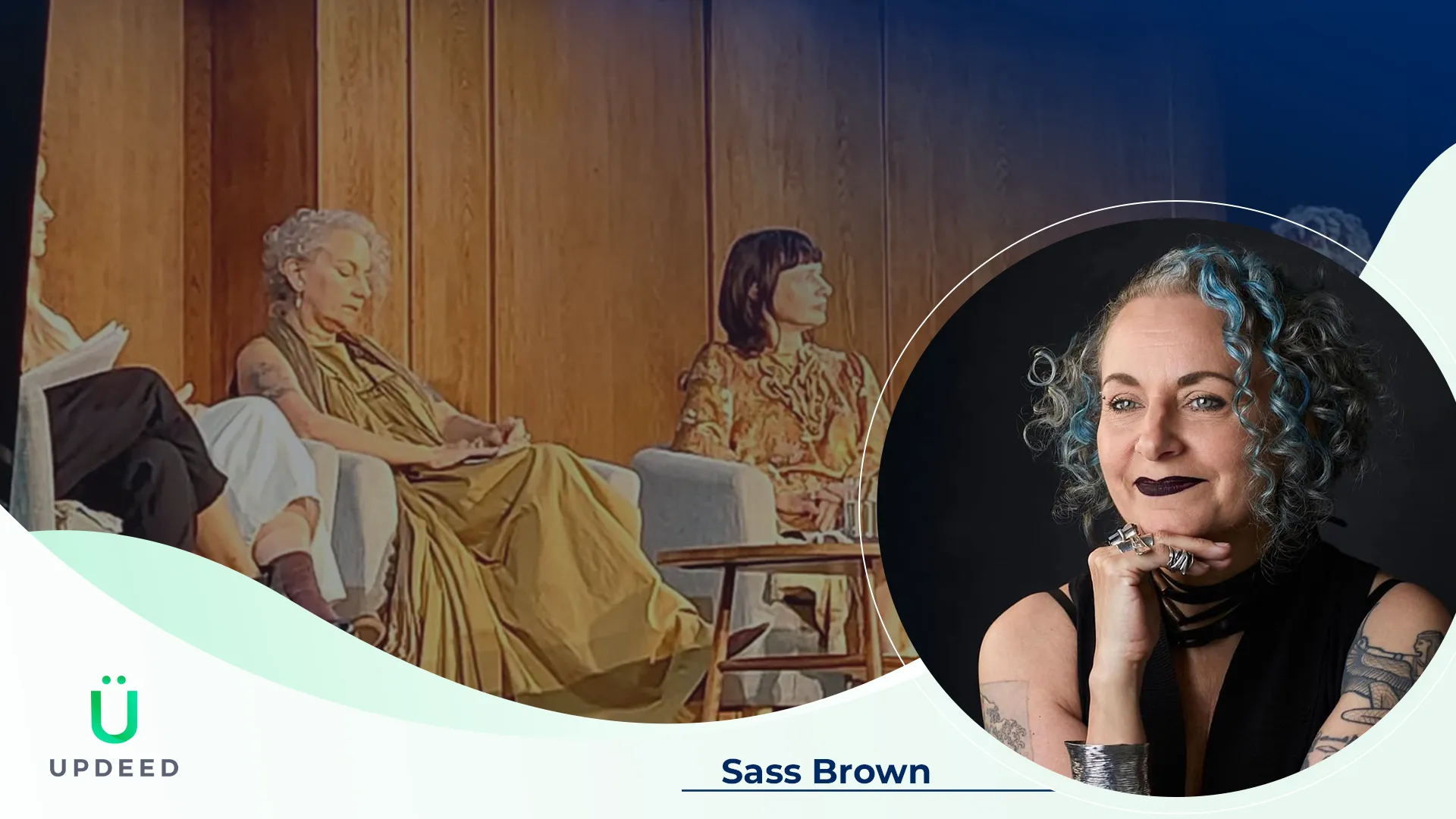
For decades, sustainability in fashion was treated as a compromise, practical, necessary, but rarely aspirational.
Dr. Sass Brown helped change that narrative.
A writer, educator, and designer, Dr. Sass Brown has spent her career reframing ethical fashion as something not only responsible, but desirable, creative, and culturally rich. Today, she serves as Lead for the MA Sustainable Fashion Business and Practices at Kingston University, a programme she developed and delivers. Previously, she was the Founding Dean of the Dubai Institute of Design and Innovation, a cross-disciplinary university established in partnership with MIT and Parsons The New School. She also served as Interim Dean for the School of Art and Design at the Fashion Institute of Technology, overseeing 17 design departments.
As a researcher and author, her expertise spans slow design, heritage craft, recycling and reuse, alternative business models, and ethical production practices. She has published two seminal books , Eco Fashion and Refashioned , alongside academic papers, and has spoken globally on ethical fashion. Her advisory work has supported women’s cooperatives, educational institutions, governments, NGOs, and SMEs.
At the heart of her work is a consistent mission: to influence the mainstream fashion industry by documenting, educating, and amplifying real examples of ethical practice, and to provide practical guidance on how change can actually be implemented. This work continues through her platform, ClothingEthics.com, where she shares research, insights, and stories of designers, brands, and artisans creating impact.
Below, Dr. Sass Brown shares her journey in her own words.
Tell us a bit about your background
I am a writer, educator and designer focused on sustainable and ethical fashion. I am currently the Lead for Kingston Universities MA Sustainable Fashion Business and Practices, a programme I developed and deliver for them. Prior to that I was the Founding Dean of the Dubai Institute of Design and Innovation, a cross disciplinary University in partnership with MIT and Parsons the New School. I was also the Interim Dean for the Fashion Institute of Technology’s school of Art and Design in New York, where I oversaw 17 design departments.
As a researcher, writer and educator, my area of expertise is ethical fashion in all its forms from slow design and heritage craft skills to recycling, reuse, alternative business models and ethical practices. I published two books on the topic: Eco Fashion and Refashioned, as well as published papers and spoken around the world on the topic. I have served as a sustainable design advisor for women’s cooperatives, educational institutions, governmental agencies, NGO’s and small and medium sized enterprises. My personal mission has always been to impact the mainstream fashion industry by writing and sharing examples of designers, brands and artisans making a difference through their work, and to disseminate, educate and advise others on how to implement real change which I share on my website www.ClothingEthics.com and the associated Instagram feed.
What first inspired you to begin this journey?
As a designer for large US and Canadian brands, I was slowly worn down by big egos and penny pinching practices that took advantage of people and planet that embarrassed and belittled others. I fell into teaching as an alternative outlet, something it turned out I had an unexpected talent for. My writing developed as I pursued my MA and then my PhD, all focusing on fashion that had a positive impact and supported global artisans.
What has been one of the most defining challenges you faced?
Probably one of the biggest challenges I faced is when I accepted the position as Founding Dean of the Dubai Institute of Design and Innovation. I joined the Institution at an early stage of development, with just a couple of other employees, none of whom were academics or creatives, with the licenses and validations for the programme still to be applied for or granted.
It was an incredible challenge undertaking and forming the foundations of an entirely new institution, with very high profile academic partners in MIT and Parsons, one that took a lot of learning on the job resulting in some daunting responsibilities, all in a country I didn’t know, where I did not have a network of support. Ultimately however, it became the thing I am most proud of in my academic career; building a creative community of like minded academics and industry supporters that was inclusive, collaborative and supportive that permeated every aspect of the academic reality of the faculty and the students.
I learned to take advantage of what opportunities presented themselves and take the leap of faith necessary to pursue those opportunities.
What impact do you feel your work has created so far?
Having been part of a small, global community talking, writing and promoting ethical and sustainable design long before it was fashionable, I know I played a role in disseminating and educating others on its importance. I also like to think I helped position ethics and sustainability as inspirational at a time when nobody else was talking about the need for sustainable apparel to be desirable.
To do that I also helped connect the dots between emerging designers around the world as my publications and writing were global and inclusive by default.
What is your vision for the future?
I am working on rebuilding my website and social content. I took time away from it while doing my PhD, and during all encompassing commitments to the various institutions and programmes I led, and now it’s time to turn back to it, promote it, expand it and share it.
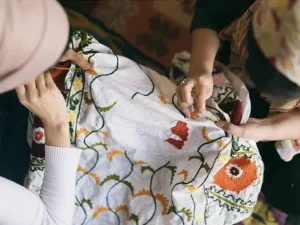
I am also in the early stages of writing a third book, this one specific to global artisanship, and it is my hope to start to do much more hands on work with artisans again. My broader vision for the future, is an industry that recognizes global artisans as master craftspeople in the luxury fashion sector.
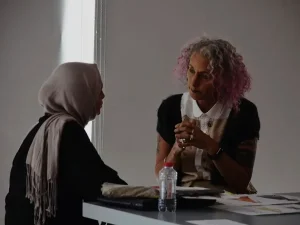
What message would you share with others who want to create positive change?
Just start. Start small, start focused and be completely honest and transparent on your journey. Sustainability is not a PR or marketing exercise, it is an imperfect journey we are on to make tangible change in a system that has historically excluded, appropriated and exploited people and planet. Do what you can, commit to it and be honest and open about your progress.
UPDEED Reflection
Dr. Sass Brown’s work reminds us that lasting change in complex industries does not come from trends, it comes from education, integrity, and long-term commitment.
Long before ethical fashion became part of mainstream discourse, she was documenting it, teaching it, and connecting designers and artisans across borders. By insisting that sustainability could be both responsible and desirable, she helped shift how the industry understands value.
At UPDEED, we spotlight changemakers like Dr. Sass Brown because they operate upstream to shaping mindsets, curricula, and narratives that influence generations of designers, brands, and decision-makers. Her work demonstrates that when ethics are embedded into education and practice, impact multiplies quietly but profoundly.