

Renewable energy is energy that comes from natural sources that are replenished at a higher rate than they are consumed.
It includes sources such as sunlight, wind, rain, tides, and geothermal heat.
Renewable energy is becoming increasingly important as we look for ways to reduce our reliance on fossil fuels and combat climate change.
There are many reasons why renewable energy is significant in combating climate change. First, renewable energy sources do not produce greenhouse gases, which are the primary cause of climate change.
Second, renewable energy sources can help us to reduce our reliance on fossil fuels, which are a major source of greenhouse gas emissions.
Third, renewable energy sources can help us to create jobs and boost the economy.
There is growing global interest in renewable sources like solar, wind, and hydroelectric power.
This is due to several factors, including:
- The increasing cost of fossil fuels.
- The growing awareness of the environmental benefits of renewable energy.
- The development of new technologies that make renewable energy more affordable and efficient.
Renewable energy has several environmental benefits.
It can help to reduce air pollution, water pollution, and land pollution. It can also help to conserve natural resources and protect wildlife.
Renewable energy can also help to promote sustainable development by providing access to clean energy in remote areas.
Understanding Solar Power
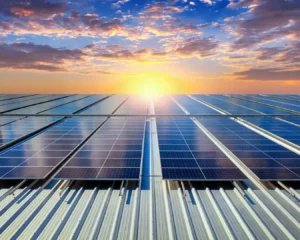
Solar power is a renewable energy source that has the potential to revolutionize the way we generate electricity. Photovoltaic (PV) cells are the basic building blocks of solar panels, and they convert sunlight into electricity through a process called the photovoltaic effect.
When sunlight strikes a PV cell, it knocks electrons loose from their atoms, creating an electric current.
The amount of electricity generated by a PV cell depends on the amount of sunlight it receives, as well as the efficiency of the cell.
Solar panels are made up of many PV cells connected.
The panels are typically mounted on rooftops or in open fields, and they can be used to generate electricity for homes, businesses, and even entire communities.
Solar power has several advantages over other forms of energy generation.
It is a clean and renewable source of energy, and it does not produce any greenhouse gases. Solar power is also becoming increasingly affordable, as the cost of PV cells has declined in recent years.
There are several successful solar power projects around the world. In the United States, for example, the Solar Energy Industries Association (SEIA) reports that there are now over 2 million solar installations in the country.
These installations generate enough electricity to power over 10 million homes.
Advantages of Solar Energy
Solar energy is a clean, renewable source of energy that has many advantages over traditional energy sources such as fossil fuels.
Solar power can help reduce greenhouse gas emissions, lower electricity bills, create jobs, enhance energy security, promote energy independence, and contribute to a more sustainable and resilient energy infrastructure.
One of the most significant advantages of solar energy is its ability to reduce greenhouse gas emissions.
When solar panels are used to generate electricity, no greenhouse gases are emitted into the atmosphere.
This is in contrast to fossil fuels, such as coal and natural gas, which produce significant amounts of greenhouse gases when burned.
Solar energy can also help to lower electricity bills.

When homeowners or businesses install solar panels, they can generate their electricity, which can reduce or eliminate their reliance on the electric grid.
This can lead to significant savings on electricity bills, especially in areas with high electricity rates.
In addition to reducing greenhouse gas emissions and lowering electricity bills, solar energy can also create jobs.
The solar industry is a rapidly growing industry, and it is creating jobs in a variety of fields, including manufacturing, installation, and maintenance.
Solar energy can also enhance energy security and promote energy independence.
When countries rely on solar energy to generate electricity, they are less reliant on imported fossil fuels.
This can make countries more secure and less vulnerable to energy price shocks.
As we explore the potential of solar power, it’s important to recognize it as part of a broader shift towards green technologies that can mitigate climate change. Our previous article “The Role of Green Technology in Mitigating Climate Change” highlighted how eco-friendly innovations across different sectors are crucial for reducing our environmental impact. Solar energy is a key example of such a green technology that can drive sustainable development.
Overcoming Challenges
Here are some challenges associated with solar energy adoption:
- Intermittency
Power stability refers to the fluctuation of the power source which can be predictable on non-predictable below. - Storage limitations
As various types of storage technologies are different, the expenses of fully equipped battery storage are huge and so far, cheaper as it is the least cost-efficient. - Upfront costs
The problem of using large amounts of the sun’s resources to generate power is the biggest downside of adopting solar energy. - Wireless power transmission
A technical problem that the space-based photovoltaic systems are facing. - Mountainous terrain
It makes the implementation of PV, especially large ones, on the ground quite impossible.
Here are some technological advancements and policy initiatives to overcome these obstacles:
- AI
IBM Watson is developing AI solutions to automate solar O&M tasks and to optimize the performance of solar systems.
Tesla is using AI to develop more efficient solar panels and to integrate solar energy with its battery storage systems. - REPowerEU plan
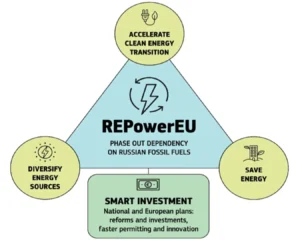
In May 2022, the Commission adopted an EU solar energy strategy as part of the REPowerEU plan.
The plan identifies remaining barriers and challenges in the solar energy sector and outlines initiatives to overcome them and accelerate the deployment of solar technologies.
Harnessing Solar Energy
Sun is the most abundant and renewable energy source which can be utilized to meet a large frustration of the energy demand of the world.
Photovoltaic or PV suggests the use of an assortment of solar power technologies like solar photovoltaics (PV), concentrated solar power (CSP), and solar thermal energy to harness the sun’s heat for electricity.
PV systems simply convert sunlight into electricity while CSP systems by using mirrors, beam the sunlight onto hot receivers which produce heat itself that can be used to generate electric energy or steam.
Solar thermal energy is used to heat water or other fluids, and such fluids can then be employed in several ways. For instance, they are used for space heating and in industrial process heat.
Over the last few years, the production of global solar energy has been growing fast in line with the price drop because more governments have started to support it.
As of 2021, solar PV capacity has successfully reached 760 GW from 2010 data with only 40 GW capacity. Since 2010 (the year when solar PV came to light), it has already reached about 4% of global electricity production. Having this growth rate, experts say that the following years could be more beneficial for its use.
The growing adoption of solar power aligns with larger global efforts to transition towards clean energy sources, as highlighted by initiatives like the European Union’s push discussed in “The European Union Is Turning Towards Clean Energy As Fossil Fuels Decline. We Need To Continue…”.
Countries and regions around the world are recognizing the necessity of embracing renewable energies like solar to reduce dependence on fossil fuels and mitigate climate change.
Future Trends and Opportunities
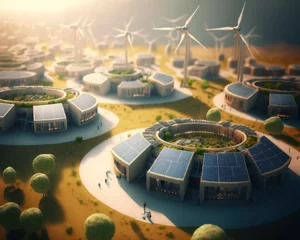
Here are some ideas on future trends and opportunities in solar energy:
- Hybrid systems
As professionals in energy, the experts noticed surely some good points when using the combination of home wind and solar electric technologies instead of them alone have several excellent benefits. - Solar energy and some other **renewable energy sources**
Sunlight is the source of the energy of the planet.
It is accessible on a large scale and, therefore, is an effective alternative to the non-renewable energy sources that are unsustainable.
It can help overcome the energy dependence of the countries, enable using waste materials as a secondary energy source, reduce emissions, and diminish the expensive procedures of GHG emissions control. - Solar panel efficiency
Unlike any other home solar equipment yet, most decent solar panels have an efficiency rating of 19% to 21%.
However, this number tends to increase as the solar tech is updated and more manufacturers are reaching 22% or above. - Solar energy storage
Lithium-ion batteries are the dominant in the energy storage market, but newer technologies such as solid-state batteries and flow batteries have higher energy density which is higher, longer lifespan, and higher safety.
To conclude
Simply put, solar power is an optimal crucial step to a reliable transformed world with a sustainable environment.
What is more, it presents an opportunity to cut down the rate of carbon emissions production, reduce energy bills, and ensure energy security at all times.
We appreciate emission-free and environmentally friendly solar energy in the face of existing climate change and environmental damage scenarios.
The sun possesses a tremendous potential for the provision of clean energy, and this can be used as a starting point for a paradigm shift.
Please let us all in unison for a solar energy class and as a community push for the adoption of solar energy.
Jointly we in turn will be the spark of positive action and lead us there where the world will be as fresh as it will be nice for our children and grandchildren to live in.
Ready to make a positive impact in the world?
UPDEED is the place for you. Our free and open platform is filled with inspiring stories from individuals and organizations who are making a difference in their communities and beyond. Connect and collaborate with like-minded individuals from around the globe on UPDEED, and discover your own potential to create meaningful change. Join our community and make a difference.